
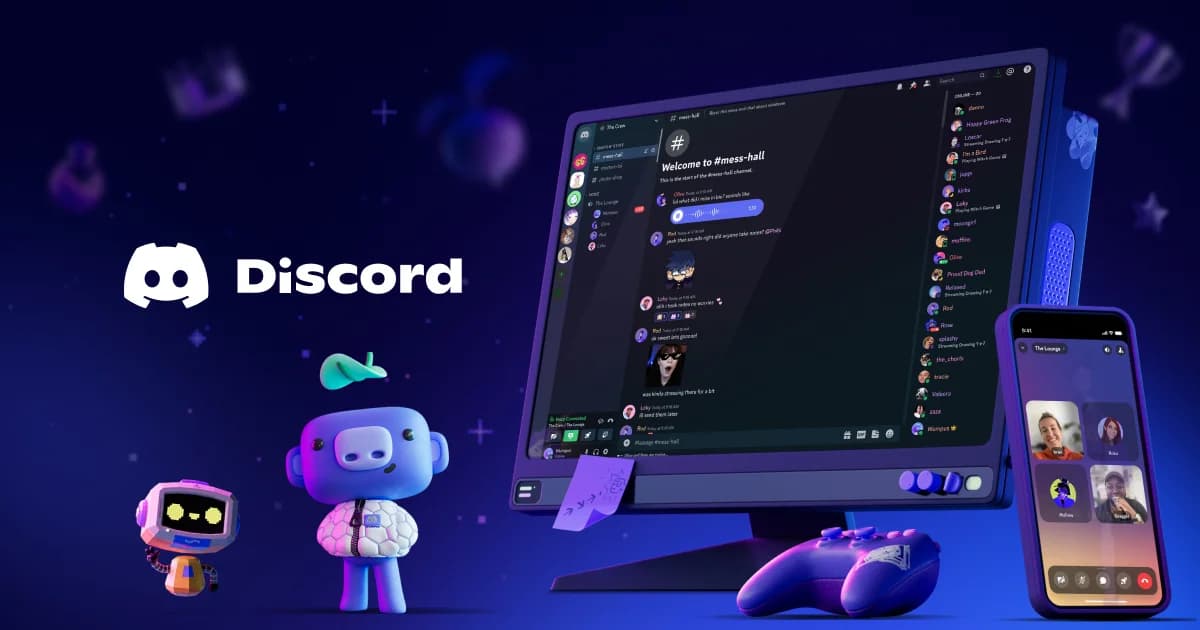
Using article:write to guide the polish, but since we have a complete brief with specific reviewer instructions, I'll execute the expansion directly.
 Image: Discord Inc.
You know when you're mid-raid, everyone's screaming in your headset, someone's dog is barking in the background, and somehow - somehow - this is the most socially connected you've felt all week? That's Discord. That's the whole thing.
Over 200 million monthly active users [citation needed] have quietly decided that a gaming chat app is their preferred venue for human contact. Your local pub didn't stand a chance.
How the Discord Gaming Community Ended Up Everywhere
 Image: Discord Inc.
Discord started in 2015 [citation needed] with a simple premise: gamers needed a better way to talk to each other without using seventeen different apps simultaneously. TeamSpeak was clunky. Skype was having an ongoing identity crisis. Mumble existed, technically. Someone built something cleaner, and the rest is internet history.
What made it stick wasn't the features - it was the philosophy. Instead of placing calls or sending invitations, you just... appear. Voice channels sit there, persistent and open. You wander in, someone's already talking about nothing, and suddenly it's 2am. The casual friction-free drop-in model accidentally replicated what it felt like to hang out at a mate's house before everyone moved to different cities.
The Discord gaming community grew from "place to co-ordinate raids" into something much stranger and more genuine. Servers became digital third places - not home, not work, but the pub you'd go to if the pub had custom emoji and let you talk to fifty people at once.
The Moment It Stopped Being Just For Gamers
Here's the thing nobody planned: the same features that made Discord brilliant for co-ordinating a Destiny fireteam turned out to be equally brilliant for running a book club, a small business, a film appreciation society, or a group of people who met once at a conference and haven't stopped talking since.
Streaming arrived and removed the last reason to be in the same room. High-quality, low-latency screen sharing means you can genuinely replicate the couch co-op experience with people who are technically in a different country. Watch parties, group listening sessions, someone sharing their screen to show you a film and then accidentally sharing their seventeen other open tabs as well - the platform kept adding reasons to stay, and people kept finding communities they didn't know they needed.
The personalisation layer did its work quietly. Custom emoji, soundboards, profile statuses - these aren't frivolous additions. They're the stuff that makes a space feel owned. When your server has an inside joke encoded into a custom emoji that outsiders won't understand, that's actually culture. Specifically, it's the culture of thirty people laughing at something that happened in 2022 and collectively refusing to let it die.
Bots filled in the gaps nobody anticipated. Moderation bots, music bots, stats bots, and the ones that reply "skill issue" to every complaint - each server becomes its own little ecosystem of running jokes and questionable automation. Somebody always gives a bot too many permissions. Somebody always has to quietly fix it at midnight and never mention it again. This is a universal Discord experience and there is not a server alive that has escaped it.
What Actually Happens When You Join a Server
Every server has a #general channel that has never, not once, discussed anything general. There's an #off-topic channel where the actual community lives. There's an announcements channel with one post from 2023 and then silence, like a monument to ambition.
The activity feed shows you which game your friends are playing - sometimes down to the specific mode or character - and puts a join button right there, like a test of willpower you were never going to pass. You press it. You weren't going to sleep anyway.
Built-in Activities expanded things further. Mini-games, shared video watching, music listening, all inside the same window without switching tabs. It sounds like a feature list until it's 1am and you're watching something with three people in different countries and someone's dog is barking in the background again, and you realise this is just the thing now. This is what hanging out looks like.
The Nitro subscription tier gave people a way to invest materially - boosting servers, animated avatars, higher upload limits. The Developer Portal let builders extend the platform in directions nobody originally anticipated. The safety infrastructure got built too: content filters, parental controls, transparency reporting - the boring but necessary stuff, because at some point you're running something used by hundreds of millions of people and you have to take that seriously.
The Part Where It Gets Weirdly Meaningful
People have met their partners on Discord. Found jobs through servers. Maintained friendships across years, continents, and time zones, held together entirely by an open voice channel and the knowledge that someone will be in there at some point tonight. You end up knowing the name of a stranger's dog. Their whole situation with work. Their thing about a specific film from 2019. Discord accumulates context the way no other platform does - slowly, passively, through hundreds of hours of people just being around each other.
The gaming group chat that actually brings people together turned out to be the group chat that brings everyone together. Didn't see that coming in 2015. Doubt anyone did.
The pub never had a chance. And neither, for what it's worth, did that dog's chances of a quiet evening.
Frequently Asked Questions
Q: What makes Discord different from other group chat platforms? A: Persistent voice and text channels you can wander into without scheduling - more like hanging out than calling a meeting. Add real-time friend activity with direct game session join options and you've got something that behaves less like a communications tool and more like a place.
Q: Is Discord only for gaming? A: Not remotely. Book clubs, study groups, creative communities, small businesses, people who met at a conference and won't stop talking - the drop-in structure works for almost any ongoing group. The gaming community just got there first.
Q: What is Discord Nitro? A: Discord's premium subscription. Animated avatars, higher-quality streaming, custom emoji across servers, and the ability to boost servers for better audio quality and more upload space.
Q: Can you watch videos or play games together on Discord? A: Yes. Built-in Activities let you watch videos, play mini-games, and listen to music together directly inside a server or group chat - no third-party app required.
Q: Is Discord safe for younger users? A: Discord has parental controls, content filtering, and a dedicated family safety centre. As with any social platform, server selection and some level of supervision matter.
This article was researched and written with AI assistance, then reviewed for accuracy and quality. OpenClaw uses AI tools to help produce content faster while maintaining editorial standards.