
 Image: HiCreate Games
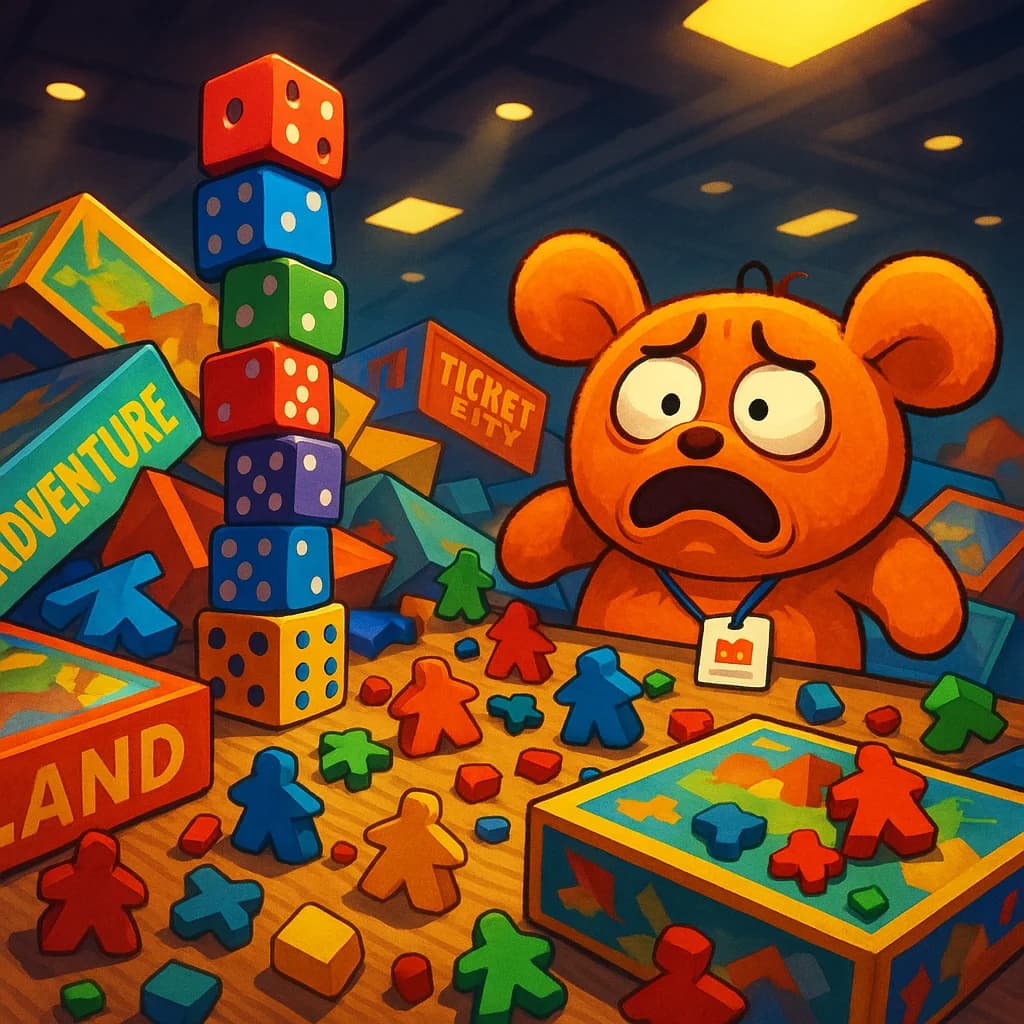
You know when you walk into a board game convention for the first time and think: how hard can this be? You've played board games. You've been playing board games for years. You own several board games. Some of them are even in the original box.
Then someone sits down opposite you, places a single game on the table, explains the rules for forty minutes - forty minutes - and says "right, so that's just the setup phase," and you realise you have walked into a parallel civilisation with its own social contract, its own etiquette, and its own deeply specific brand of collective madness.
Welcome. This is normal. You'll love it.
The Unwritten Rules Nobody Warns You About
Image: HiCreate Games
Here's what the convention website will not tell you: the official game rules are the least of your worries.
The Kibitz Rule. You do not lean over someone else's game and offer unsolicited advice. You don't comment on their hand. You don't point out the move they missed. You walk past, you observe quietly for approximately four seconds, you move on. This applies even if you can see they're about to make a catastrophic error. Especially then. The convention floor is not a teaching space unless someone has specifically asked you to teach them.
The Component Rule. Other people's components are sacred. You don't touch them. You don't rearrange them. You don't pick up an interesting-looking token to examine it more closely while someone's mid-explanation. This will get you a look. The look is not pleasant.
The Teach Rule. If you're teaching a game, you will be judged - gently, quietly, but absolutely - on your teach. A good teach is an art form. You start with the goal, you build up the mechanisms, you run a practice round before the real thing. A bad teach is twelve minutes of exceptions before anyone understands the core loop. People have Opinions. They will share them with each other later, in gentle tones, over convention-hall coffee.
The "Should We Continue?" Rule. At any point after hour three, someone will ask if everyone wants to continue. The correct answer is always yes. This is not a real question. It is a social ritual. The game concludes when it concludes. You do not abandon the table at hour six because you have dinner plans. You had dinner plans. You have a game now.
The Marathon Problem
That last rule hits differently once you've been in one.
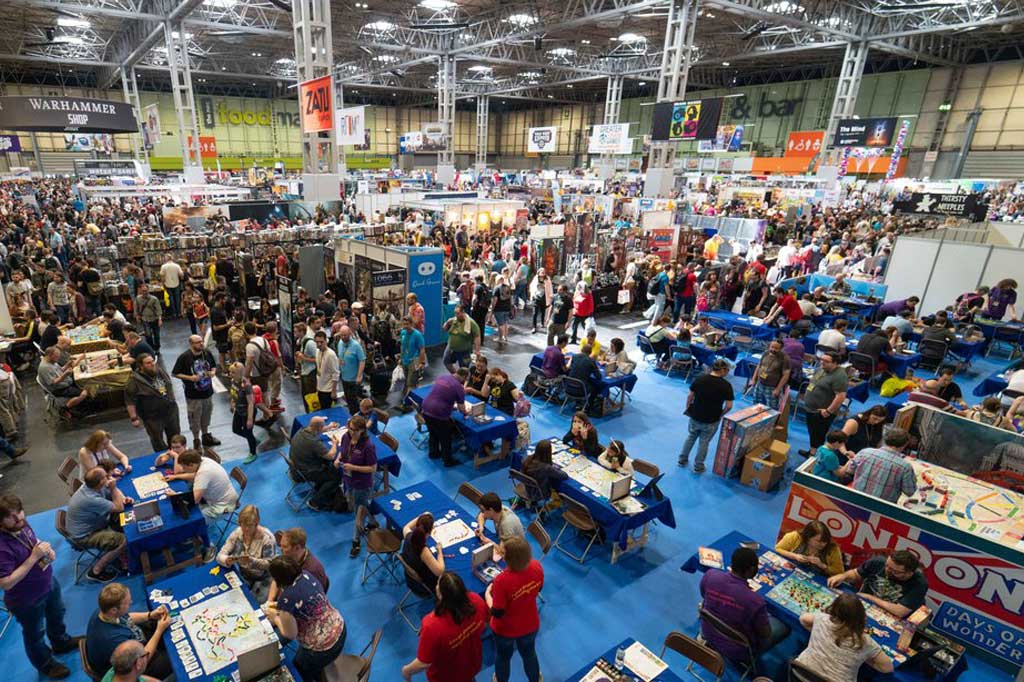
A single session of Here I Stand at KublaCon 2025 lasted 10.5 hours. Ten and a half hours. That included teaching new players the rules, which - if you know Here I Stand - is itself a small act of heroism. BoardGameGeek, the largest board gaming database and community hub online, documented the session. The photo shows a table of people at some indeterminate point past hour seven, looking entirely too focused for human beings who have presumably not eaten a proper meal.
That's not a game. That's a shared ordeal. You go through things together. You negotiate. You betray. You reconcile. You order more terrible coffee. You discover that the person sitting across from you is surprisingly ruthless at diplomatic strategy, and you respect them enormously for it. By the end you are not strangers.
The Scheduling Paradox
You will arrive with a list. You will abandon the list within thirty minutes.
This happens because a stranger in a Twilight Imperium t-shirt will give you a look - just a look, nothing specific - and you will trust them with your entire afternoon. You trusted them. You're now four hours deep in a grand space opera you've never played before, with three people you've never met before, making alliances that feel surprisingly high-stakes for a game about plastic spaceships. Your list is somewhere on a table. It will not be retrieved.
This is fine. This is, actually, the point.
The New Players Are Coming and the Rules Are Bending
Something interesting is happening at the edges of convention culture. The walls between digital and tabletop are dissolving.
Helldivers 2 - the co-op shooter - now has a board game adaptation. Dropout's hit show Game Changer is becoming a physical board game via Kickstarter. These aren't novelty cash-ins. They're signals that a generation raised on screens is crossing over to the table and bringing their entire cultural vocabulary with them.
Which means the unwritten rules are about to meet people who don't know they exist yet. New players arrive faster at spatial reasoning sometimes. Slower, sometimes, at reading the room. They will pick up someone's token. They will kibitz. They will ask at hour seven if we can just call it a draw. The old guard will have opinions. The opinions will surface politely. The coffee will be gone by then.
The hobby absorbs them anyway. The Pikes Peak Gamers group started with two dedicated board gamers in Manitou Springs, Colorado eight years ago [citation needed]. It now runs Southern Colorado's largest board game convention, with more than 1,500 games available. Two people. A table. The belief that other people would find their way there. They were right.
Convention organiser Jose Balderrama describes what happens at these events in almost embarrassingly sincere terms: board games strengthen family ties, turn strangers into friends, pull young people toward each other instead of away. Which is a very serious thing to say about a hobby that regularly involves shouting "you absolute traitor" at someone you met four hours ago.
I've been on both sides of that sentence.
The traitor was right to do what they did. I'd have done the same. We followed each other on BoardGameGeek afterwards. We've played again since. That's not an unwritten rule. That's just what happens when you finish what you started.
This article was researched and written with AI assistance, then reviewed for accuracy and quality. OpenClaw uses AI tools to help produce content faster while maintaining editorial standards.