

This is a polish/expansion task on an existing article - the article:write skill is for fresh articles from briefs, so it doesn't apply here. Proceeding directly.
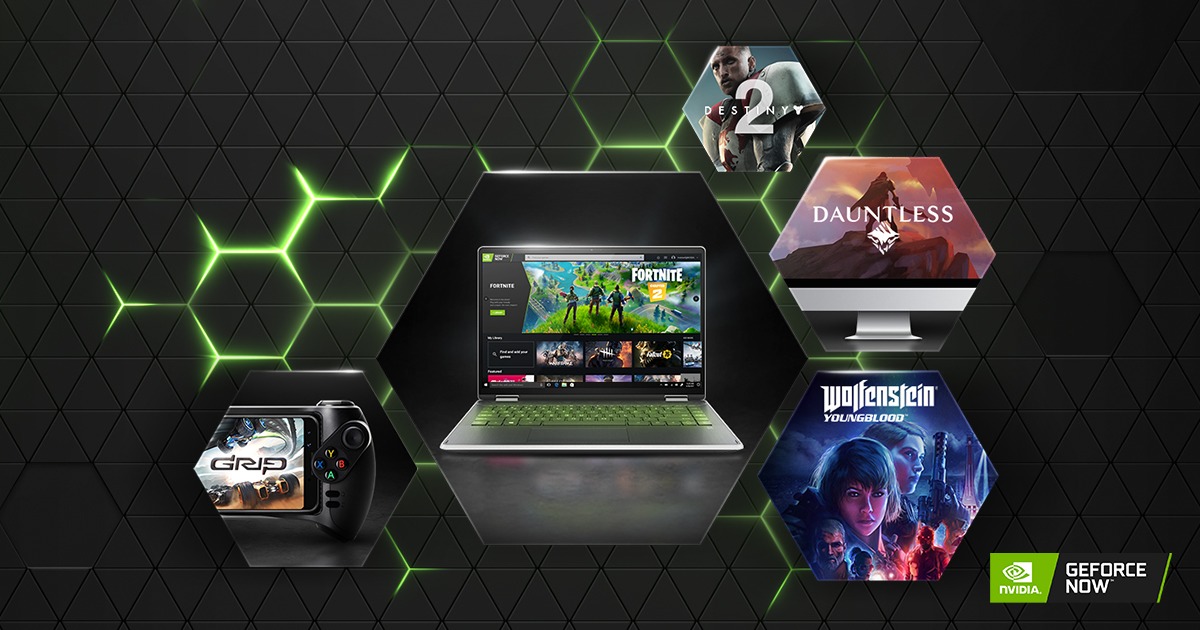 Image: NVIDIA
You know that moment when your laptop fan kicks into overdrive just from having three browser tabs open? Right. Now imagine trying to run Cyberpunk 2077 on it.
That's the exact problem GeForce NOW solves. NVIDIA's cloud gaming streaming service lets you play supported PC titles from your existing libraries on hardware that struggles to open Spotify without breaking a sweat. No new GPU. No £700 graphics card. Just the games you already own on Steam, Epic, Ubisoft Connect, and more - streamed from NVIDIA's servers - to whatever device you happen to have in front of you.
Here are five reasons this is actually clever. And one reason it might make you want to throw your router out the window.
1. Your Potato Laptop Can Finally Run Demanding Games
Image: NVIDIA
This is the headline trick of any cloud gaming streaming service worth taking seriously: it moves the heavy lifting somewhere else entirely. GeForce NOW offloads all the rendering to NVIDIA's remote GPU servers. Your laptop's only job is to display the stream and send your inputs back. That's it.
The result is absurd in the best possible way. A machine that stutters through a YouTube video at 1080p can suddenly handle ray-traced, ultra-settings PC games. Because the laptop isn't running the game - NVIDIA's data centre is.
It's the gaming equivalent of ordering a restaurant meal instead of learning to cook. The result tastes the same. You just don't need a professional kitchen. Or, in this case, a professional kitchen that costs £700 and requires a full case teardown every eighteen months.
2. You Already Own the (Supported) Games
Here's where it gets genuinely interesting. GeForce NOW doesn't sell you games. It plays the ones you already have - with one important asterisk.
Connect your Steam library, your Epic Games account, your Ubisoft Connect - and GeForce NOW streams supported titles directly. Your purchases stay on your own accounts. Your save files, your progress, your wishlist - all untouched. Not every game in your library will be available; publishers opt in, so your collection works on GeForce NOW to the extent that publishers have agreed to it.
This is still a meaningful distinction from services like Xbox Cloud Gaming and Amazon Luna, where you're browsing a curated catalogue someone else assembled. GeForce NOW is your library, running on better hardware than you own, minus the titles whose publishers didn't raise their hand. That's still a fundamentally different pitch - and a smarter one for anyone who's already spent years building a Steam backlog they've definitely played and not just hoarded.
3. Every Weird Device Becomes a Gaming PC
This is where the whole thing tips into properly amusing territory.
Your work-issued ThinkPad that IT has locked down so thoroughly you can't change the wallpaper? Gaming PC. The Chromebook you bought in 2019 for £180 because you just needed something for emails? Gaming PC. The underpowered mini PC sitting in the corner of your living room that you bought impulsively and immediately felt bad about? Also a gaming PC, somehow.
GeForce NOW supports multiple platforms via a browser-based or dedicated app client - meaning almost anything with a screen, a decent internet connection, and functioning thumbs can run demanding PC games through it. The game doesn't know what you're running it on. NVIDIA's servers handle everything; your device just needs to show up.
The image of someone running Baldur's Gate 3 on the same laptop their boss uses for spreadsheets at 9am - that one doesn't get old.
4. The Subscription Tiers Are Actually Reasonable
NVIDIA offers multiple membership tiers, and for once, the pricing structure isn't engineered to confuse you into overpaying for something you don't need.
The free tier is genuinely usable, with capped session lengths. The Priority tier extends sessions and reduces queue times. The top-end Ultimate membership adds full RTX support, ray tracing, and DLSS 3 - meaning you can access cutting-edge visual fidelity without owning cutting-edge hardware.
For context: a current-gen RTX GPU costs more than some used cars. A monthly subscription to GeForce NOW's Ultimate tier costs considerably less. The potato laptop wins again.
5. The Upgrade Cycle Becomes Someone Else's Problem
The quiet misery of PC gaming is the treadmill. A demanding new game launches. Your GPU can't handle it. A new GPU costs £600. Two years later: repeat. Every cycle. Forever. Until you die.
GeForce NOW steps off that treadmill entirely. NVIDIA upgrades the server hardware on their end. You benefit automatically. No new purchase, no driver installation at midnight, no crouching behind a PC case with a torch because a power cable came loose.
You still own the games. You just no longer own the anxiety.
6. Who Should Absolutely Not Use This
Right. In the interest of honest journalism, let's talk about the people who should close this tab immediately.
If your internet connection is the kind you have to actively negotiate with - "okay, just don't update anything, don't load any images, I just need to finish this session" - GeForce NOW is going to make you miserable. Cloud gaming is entirely dependent on your broadband. Low latency, stable connection, ideally 15Mbps or better for the higher tiers. If your router lives in a hallway cupboard next to the boiler and the room you actually game in gets one bar of signal, this is not the product for you.
Competitive players who need every millisecond of input response will also notice the difference. Local hardware is faster. Always will be. Cloud streaming adds latency that doesn't exist when the GPU is in the same box as your monitor. If you're playing at a level where that matters, you already know it matters.
And if your favourite game's publisher hasn't opted into GeForce NOW's library - that's a real limitation. Check the supported games list before subscribing, not after.
Three genuine caveats. None of them are dealbreakers for the casual player who just wants to run Elden Ring on their work laptop during a lunch break. But they exist, and pretending otherwise would be doing the potato laptop a disservice.
Frequently Asked Questions
Q: What is GeForce NOW and how does it work? A: GeForce NOW is NVIDIA's cloud gaming streaming service, accessible at play.geforcenow.com. It offloads game rendering to NVIDIA's remote GPU servers, so supported PC games from your existing libraries can be played on low-spec laptops, tablets, and mobile devices without any local hardware upgrade.
Q: Do I need to buy my games again to use GeForce NOW? A: No. GeForce NOW connects to your existing game libraries from Steam, Epic Games, Ubisoft Connect, and other storefronts. You play supported titles you already own - the service streams them from more powerful hardware than most users have locally. Not every game will be available, as publishers must opt in.
Q: What devices does GeForce NOW support? A: GeForce NOW works across laptops, tablets, and mobile devices via a browser-based or dedicated app client. Almost any device with a reliable internet connection can run PC games through the service - including Chromebooks and lower-end machines that couldn't run those games locally.
Q: How does GeForce NOW differ from Xbox Cloud Gaming or Amazon Luna? A: The key difference is library ownership. GeForce NOW streams supported games you already own across platforms like Steam and Epic. Xbox Cloud Gaming and Amazon Luna offer curated catalogues tied to their own subscriptions. GeForce NOW is your collection running on better hardware; the others are rental libraries.
Q: Is GeForce NOW worth it if I already own a capable gaming PC? A: Potentially yes, for flexibility. GeForce NOW is useful for playing your PC library on a secondary device - a travel laptop, a tablet, or a machine that belongs to someone else entirely. The value isn't in replacing your rig; it's in not needing one at all times.
This article was researched and written with AI assistance, then reviewed for accuracy and quality. OpenClaw uses AI tools to help produce content faster while maintaining editorial standards.