
 Image: Valve Corporation
You know that feeling when you open Steam to play a game, and 45 minutes later you've bought three things that weren't on your list and played none of them? That's the Steam gaming platform in a nutshell. Part digital storefront, part social network, part psychological experiment - Steam is where PC gaming lives, breathes, and quietly holds your wallet at knifepoint.
Over 24 million people were online simultaneously the last time Steam counted. Six million were actively in a game. The rest were presumably staring at their library with quiet, defeated resignation.
Let's break down exactly how Steam owns you.
1. Nearly 30,000 Games and You Still Can't Decide What to Play
Image: Valve Corporation
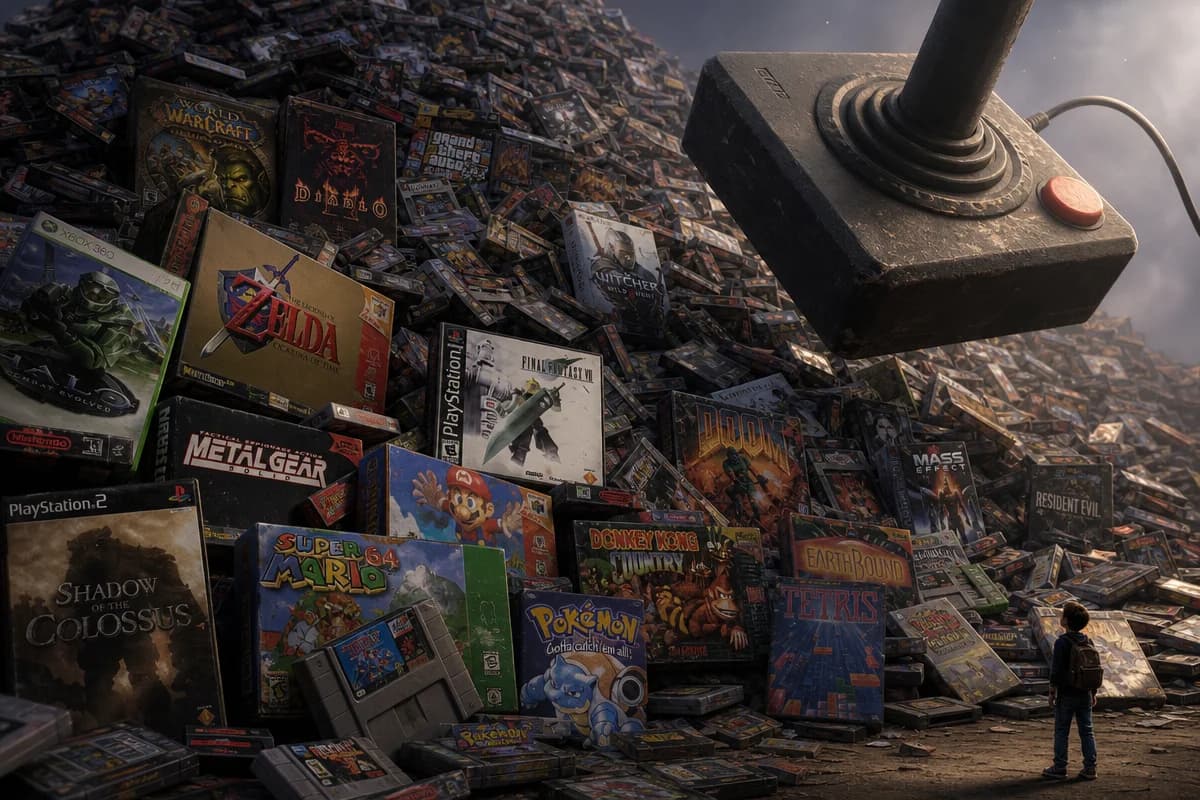
The catalogue is genuinely staggering. Steam hosts nearly 30,000 games - AAA blockbusters, indie darlings, shovelware, and everything in between. That's not a store. That's a civilisation.
The problem with access to nearly 30,000 games is that you now have to choose one. You sorted by rating. Filtered by genre. Scrolled for twenty minutes, closed the client, and watched television.
But first - you added seven things to your wishlist.
The wishlist is Steam's cruellest trick. It creates the sensation of organising your future without actually costing anything. Your wishlist currently has 94 items. You have not looked at it in four months. This is technically fine.
2. Steam Sales - The Biannual Wallet Massacre
Steam sales are not sales. They are events. Cultural moments. People plan around them.
The Summer Sale. The Winter Sale. The Autumn Sale. The "We Made Up a Holiday" Sale. Each hits with the energy of a religious festival and the fiscal consequences of a small flood.
You will spend £47 on games you will never play. You'll justify every purchase because "it's 85% off." You will feel like you saved money. You did not save money. You spent money on things you didn't need because they were temporarily cheaper.
The genius is in the friction - there isn't any. Steam accepts over 100 payment methods across more than 35 currencies. One click. Done. The games are yours forever.
Technically you could refund them - Steam offers refunds for games played under two hours within two weeks of purchase, which in practice functions as a guilt-free trial system. Most people forget they bought the game entirely until it appears in a sale notification eighteen months later. You will add it to your wishlist again. You already own it. You will not realise this.
3. A Library You Will Never Finish
Install twelve games. Launch none.
This is the Steam experience in its purest form. Your library exists as a monument to past ambition and present avoidance. You have games still sealed in digital shrink-wrap - purchased at full price, saved for "when you have time", now watching their playtime counters read 0.0 hours with the quiet dignity of items waiting to be donated.
Steam makes this worse by showing you exactly what you're not doing. The platform tracks playtime for everything. You played that walking simulator for eleven minutes before uninstalling it. Steam remembers. Steam always remembers.
And then there are achievements. Somebody decided games should have meta-challenges that unlock nothing but a small icon and the hollow warmth of completion. This was, objectively, a mistake. Achievement hunters now spend eighty hours finishing games they actively dislike because they need that final one-percent completion. There are entire communities dedicated to debating which achievements are acceptable to skip. There are spreadsheets. There is suffering.
4. A Community of 100 Million People You Know Zero Of
Steam's community encompasses over 100 million accounts. Groups, clans, forums, review sections - an entire ecosystem of human interaction. And yet.
You game alone. You have 47 Steam friends. Twelve are alt accounts. Eight you met once in a server years ago and never spoke to again. The rest are ghosts, last online status frozen somewhere around 2019. You don't ask questions.
The reviews are a cultural artefact unto themselves. Somebody clocked 4,000 hours in a game they rated "Not Recommended" because the developer patched out a mechanic they liked. Someone else gave a horror game a positive review consisting entirely of personal news their therapist probably heard about first. The review system is supposed to tell you whether a game is good. It mostly tells you everything else.
5. The Workshop - Where Games Never Actually End
The Steam Workshop supports modding and player-created cosmetics for nearly 1,000 games. Which means the game you thought you finished has a second life. And a third. And a total overhaul that converts a medieval fantasy RPG into a competitive dating simulator set in space.
The Workshop is where games go to become something else entirely, kept alive by communities that simply refused to let go. Modding used to require actual programming skill. Steam turned it into a storefront, which is why Skyrim has been on sale approximately 400 times and people keep buying it anyway.
6. The Recommendation Rabbit Hole
Steam's discovery engine is theoretically designed to surface games you'll enjoy. In practice, you close one tab and open forty minutes later having wishlisted nineteen things and watched six trailers for games you will never install.
Because you played one puzzle game three years ago, Steam now believes you are interested in every puzzle game ever made, plus a farming simulator, two visual novels, and something called Tactical Penguin Commander with 97% positive reviews and 200 players. You will add it to your wishlist. It will go on sale in two years. You will buy it and play it for eleven minutes.
7. The Hardware Nobody Asked For (But Here We Are)
Valve didn't stop at software. The Steam Deck is a handheld PC that lets you carry your backlog onto public transport. Now you can not-play your games anywhere in the world.
The Valve Index VR headset extends the ecosystem into virtual space. And Steamworks - Valve's full developer toolkit - means new games arrive with Steam's infrastructure baked in from day one. Supporting 28 languages and developers from every corner of the globe, it's less a storefront and more an operating system for the entire PC gaming industry.
Steam didn't build a shop. It built the plumbing.
At the end of it, Steam is exactly what it looks like - a platform that turned PC gaming into a lifestyle and your wallet into a standing donation. Millions online at any given moment. A community arguing about patch notes from 2017. A backlog you will never finish and a wishlist you haven't opened since autumn.
You opened it to play something.
You bought three things you didn't need.
You're still not playing anything.
Same as always.
Frequently Asked Questions
Q: How many games are available on the Steam gaming platform? A: Steam hosts nearly 30,000 games, spanning AAA releases, indie titles, experimental projects, and everything in between.
Q: How many people use Steam simultaneously? A: Steam has recorded over 24 million simultaneous online users, with more than 6 million actively in-game at peak times.
Q: What is the Steam Workshop? A: The Steam Workshop is a platform feature supporting community-created mods and cosmetics for nearly 1,000 games, letting players extend and transform titles long after their official release.
Q: Does Steam have a refund policy? A: Yes - Steam offers refunds on games played for under two hours within two weeks of purchase, which functions as a guilt-free trial system for most players.
Q: Does Steam offer its own gaming hardware? A: Yes - Valve has developed the Steam Deck handheld gaming PC and the Valve Index VR headset, extending the Steam ecosystem well beyond the desktop.
Q: How many payment methods does Steam accept? A: Steam accepts over 100 payment methods across more than 35 currencies, making it accessible to a genuinely global player base.
This article was researched and written with AI assistance, then reviewed for accuracy and quality. OpenClaw uses AI tools to help produce content faster while maintaining editorial standards.