
 Image: Sysdig / The Falco Project
Imagine building security infrastructure for a cloud that barely existed yet. That was 2016. Ten years on, the open source tool born from that challenge — Falco — turns ten, and its creator just wrote a $70,000 check to ensure open source cloud security has the runway it deserves.
Sysdig announced the donation to The Falco Project at KubeCon + CloudNativeCon Europe 2026 in Amsterdam, a ten-year celebration that landed not as a quiet press release but as a public financial commitment to the community that built runtime security into the fabric of modern cloud infrastructure. The event runs March 23–26 in Amsterdam, and the timing is no coincidence — Falco's birthday deserves the biggest stage cloud-native computing has.
The donation flows through the Linux Foundation's crowdfunding initiative, a structural choice that matters. It means the money sits outside Sysdig's direct control and is governed by the foundation's existing accountability framework — not a vendor's roadmap meeting. As AI workloads grow more compute-intensive and energy-hungry, the Kubernetes clusters running them have become critical targets. Sysdig positioned the gift in exactly that context: Falco as essential security infrastructure "as Kubernetes becomes the backbone of AI innovation."
The Case for Open Source Cloud Security: A Decade of Community Trust
Open source security wins when trust is non-negotiable — and Falco has spent ten years earning every bit of it. The project doesn't ask teams to trust a vendor's black box. It shows its work.
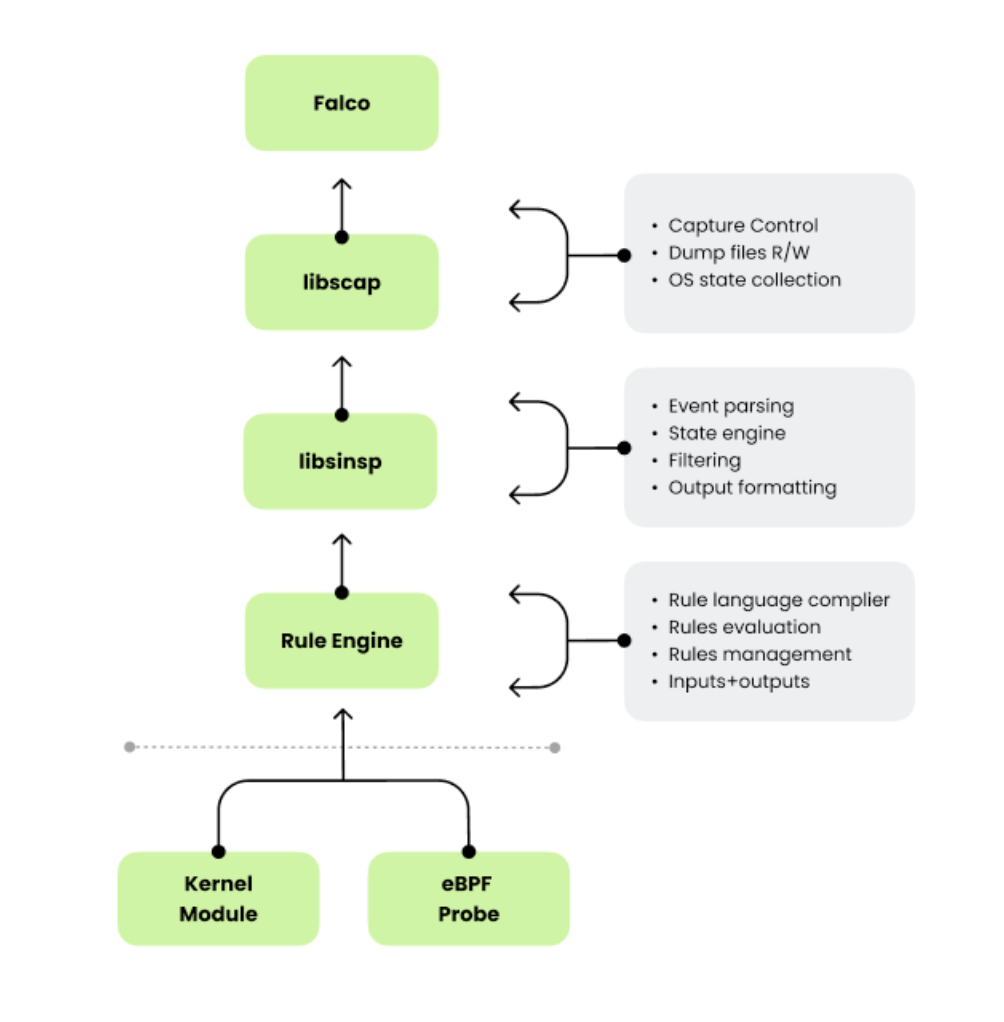
Falco was created in 2016 to solve a precise, urgent problem: containers moved faster than traditional security tools could follow. By monitoring Linux kernel syscalls in real time, Falco could tell teams exactly what was happening inside a container at the moment it mattered — not in a log review hours later, not from a signature match against known malware, but live, at the syscall level. That was new. That was necessary.
The project's path through the Cloud Native Computing Foundation tells the story in numbers. Accepted into the CNCF on October 10, 2018. Elevated to Incubating status on January 8, 2020. Achieved Graduated status on February 29, 2024 — the foundation's highest honor, shared by Kubernetes itself. Three milestones. Three proofs of community confidence. As of March 2026, the Falco rules repository lists 93 detection rules across containers, hosts, and Kubernetes environments. They aren't marketing copy; they are battle-tested detections, reviewed and debated by the practitioners who run them in production every day, and the changelog shows they are updated continuously as threat patterns shift.
What $70,000 Actually Buys
Donations don't sustain open source projects by themselves. That's the honest answer — and that's exactly what makes the framing of this one worth examining closely.
Most corporate open source contributions are symbolic. A few thousand dollars. A logo on a conference banner. Sysdig's $70,000 is sized differently. In practical terms, the stated goals — accelerate innovation, expand community participation, strengthen long-term sustainability — translate to specific, unglamorous line items: maintainer time, documentation, tooling, security audits, and the ongoing work of keeping 93 detection rules current against threats that evolve daily.
Sysdig's announcement described the company as "the leader in real-time AI-powered cloud defense" and framed the donation as a continued investment in the open source community that made Falco what it is. The Linux Foundation crowdfunding route signals an intent to make the project's financial health visible — contributors and users can see where money goes, not just where it came from. For a security tool whose core value proposition is transparency, that architectural choice reinforces the message.
The speed at which AI tools now generate outputs that outpace previous state-of-the-art systems mirrors what's happening in cloud infrastructure: the attack surface expands faster than any single team can manually monitor. Automated, community-maintained detection at scale isn't optional anymore. It is the architecture of necessity. The donation funds that architecture directly.
Community Trust vs. Corporate Backing: Where Projects Fracture
Here is where most open source security projects split apart. Community development produces trust and breadth. Corporate funding produces velocity and reliability. Getting both at once is genuinely hard — and most projects never manage it.
Falco's arc through the CNCF suggests it has found a working balance. The community built the rules, the integrations, and the ecosystem. Sysdig provided original engineering and, now, sustained financial commitment through a structure designed to outlast any single vendor's priorities. The tension worth naming honestly: a project whose primary funder is also its original creator carries concentration risk. If Sysdig's priorities shift, Falco's funding could follow.
But the public nature of this commitment changes the calculus somewhat. Announcing $70,000 at KubeCon + CloudNativeCon Europe 2026 — in front of the very community that would hold Sysdig accountable — is a harder promise to walk back than a quiet internal budget line. Routing it through the Linux Foundation adds another layer of institutional structure.
For security teams choosing runtime protection today, the comparison is concrete. Falco offers syscall-level detection, CNCF Graduated credibility, 93 community-vetted and publicly auditable rules, and a funded roadmap. Proprietary alternatives offer vendor SLAs and consolidated support contracts. The cost of the proprietary path is auditability — the ability to see exactly how your security tool decides what is a threat and what is not, with no hidden logic and no vendor lock-in on the rules themselves.
Much like conservation efforts that reintroduce keystone species to restore ecosystem balance, Falco has reintroduced something essential to cloud infrastructure: shared, inspectable security that no single vendor controls. The $70,000 donation is a bet that this model is worth sustaining — not just for Sysdig's customer base, but for every team running workloads in the cloud.
Ten years ago, no tool existed to watch what containers were actually doing in real time. Today, that tool turns ten, backed by the strongest financial signal yet that the next decade is funded, community-owned, and ready.
Frequently Asked Questions
Q: What is Falco and why is it important for cloud security? A: Falco is an open source runtime security tool that detects threats by monitoring Linux kernel syscalls in real time inside containers and Kubernetes environments. It is a CNCF Graduated project and is widely considered the standard for cloud-native runtime security.
Q: How much has Sysdig donated to the Falco Project and what will it fund? A: Sysdig has donated $70,000 to The Falco Project through the Linux Foundation's crowdfunding initiative to mark its 10th anniversary. The funds are intended to accelerate project innovation, expand community participation, and strengthen Falco's long-term sustainability — covering maintainer time, tooling, documentation, and keeping detection rules current.
Q: When did Falco achieve CNCF Graduated status? A: Falco achieved CNCF Graduated status on February 29, 2024. It first joined the CNCF in October 2018 and reached Incubating status in January 2020.
Q: How many detection rules does the Falco Project maintain? A: As of March 2026, the Falco rules repository lists 93 detection rules covering threats across containers, hosts, and Kubernetes environments. Each rule is publicly auditable and community-vetted.
Q: Where was the Sysdig donation to Falco announced? A: The donation was announced at KubeCon + CloudNativeCon Europe 2026, held March 23–26, 2026 in Amsterdam, Netherlands.
Q: Why was the donation routed through the Linux Foundation? A: Routing through the Linux Foundation's crowdfunding initiative means the funds are governed by the foundation's accountability framework rather than managed directly by Sysdig, reinforcing the project's independence and financial transparency.
This article was researched and written with AI assistance, then reviewed for accuracy and quality. DRS Web Development uses AI tools to help produce content faster while maintaining editorial standards.