
 Image: World Ocean Day / The Ocean Project
Thousands of children stood at a ship's railing last week, peering into the Pacific's blue depths, as marine scientists described the living architecture below. It was not a school trip. It was the ocean fighting back.
That scene - part of MSC Foundation's new 'Oceans Day powered by MSC Foundation' cruise programme - played out on 8 June 2026, as the world marked World Oceans Day with more urgency, and more optimism, than recent editions have managed. The occasion is organised annually by the Division for Ocean Affairs and the Law of the Sea (DOALOS) within the UN Office of Legal Affairs. This year's headline milestone: Marine Protected Areas have, according to figures cited at the UN event, crossed 10% global ocean coverage for the first time. The ocean, so long on the receiving end of humanity's worst habits, is beginning to be protected in law.
How Humanity Nearly Lost the Ocean - and What Changed
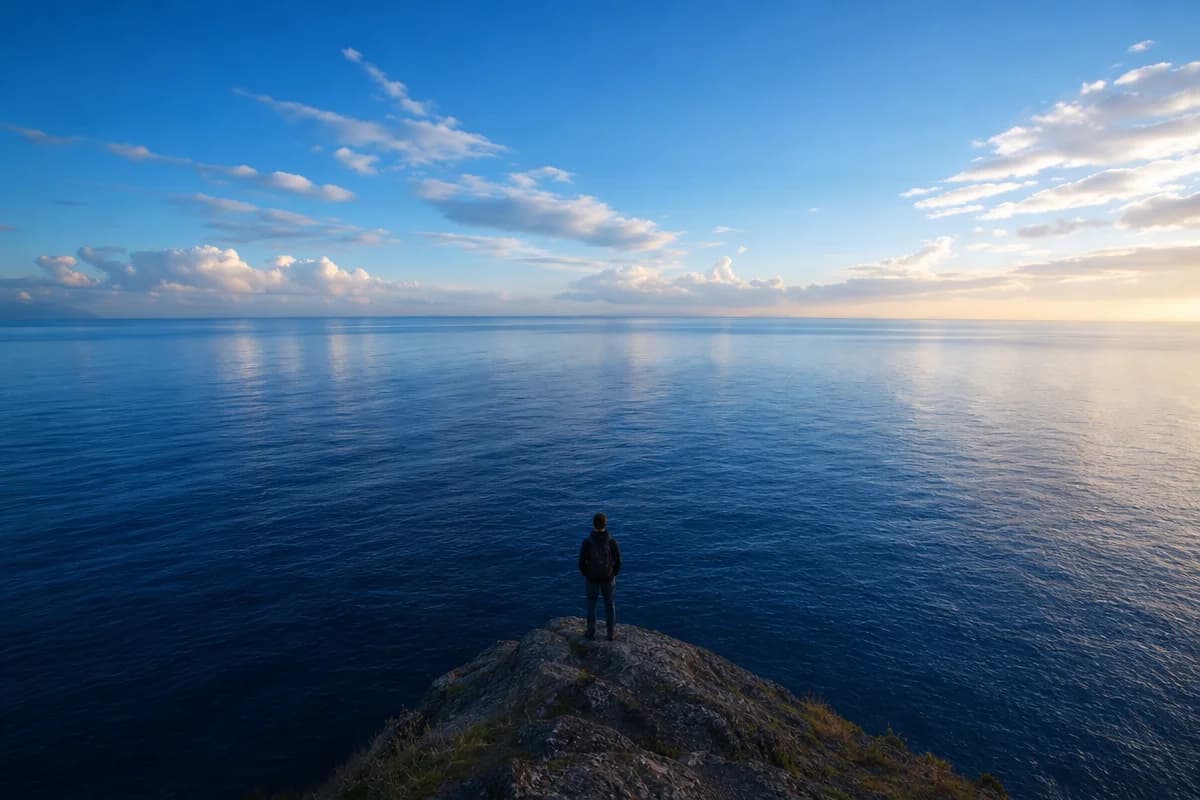
Image: World Ocean Day / The Ocean Project
The ocean covers 71% of the planet. It generates more than half of our oxygen, absorbs roughly a third of all carbon dioxide emissions, and feeds more than three billion people. It is, by any measure, the system that makes life on Earth possible. And for decades, humanity treated it like a drain.
Industrial fishing stripped biomass faster than populations could recover. Shipping lanes carved chemical trails across migration routes. Runoff from agriculture created dead zones where little survives. The UN World Ocean Assessment, released ahead of this year's celebrations, pulled no punches: ocean ecosystems are approaching critical thresholds, and the choices made in the coming years - grounded in the best available science - will determine whether recovery is still possible.
The 2026 World Oceans Day theme, officially announced by DOALOS as "Our Ocean, Our Future: Reimagining humanity's relationship with the ocean," acknowledged that the old approach had run its course. Not through guilt, but through a clear-eyed reckoning with what the science demands. Similar to the reckoning explored in Climate crisis or climate progress? Two leading scientists separate the signal from the noise, the conversation has shifted from alarm to action.
Marine Protected Areas: What the 10% Milestone Means - and Doesn't
Passing 10% global MPA coverage is a structural achievement, not merely a symbolic one. MPAs are legally designated regions where habitats, species, and ecological processes receive formal protection from extraction and destruction. Research published in PLOS ONE underscores their importance: well-governed MPAs allow fish populations to rebuild, coral systems to regenerate, and biodiversity to stabilise. The science on that specific point is unambiguous.
What is considerably less settled is whether the newly designated areas translate into real protection on the water. Conservationists and marine researchers have long distinguished between MPAs on paper and MPAs in practice. A 2024 review found that many designated zones lack management plans, enforcement capacity, or adequate funding - a pattern common across the Pacific islands, parts of Southeast Asia, and large swathes of the open ocean. Indonesia, for example, announced an ambitious MPA expansion this week even as analysts noted it remains in the early stages of converting designation into operational management. Canada's commitments under the 2022 Kunming-Montreal Global Biodiversity Framework - which set a 30% target for both land and ocean by 2030 - face similar implementation questions at home. Ireland's marine baseline analysis programme is not expected to complete full coverage until later in 2026.
The World Ocean Day organisation is clear about the next step. Reaching 10% is the beginning, not the destination. Without enforcement, a protected area is just a line on a map - and that gap between aspiration and action remains the field's most stubborn problem.
The International Maritime Organisation has heard that message. The IMO, representing 176 Member States and overseeing a global shipping industry responsible for 80% of world trade, issued a direct call this month: put existing ocean-protection policies into practice. The language was pointed. These policies already exist. The gap is implementation, not invention.
What a Reimagined Relationship Actually Looks Like
The Islands of Tahiti offer the clearest working model of what change looks like when it holds. French Polynesia's approach - weaving marine conservation into the fabric of tourism infrastructure - demonstrates that protecting the ocean and profiting from it are not competing interests. Visitors come for the coral. The coral survives because visitors fund its protection. Conservation and commerce reinforce each other rather than conflict, and that loop is now being studied by destinations across the Pacific and beyond.
Funding remains the most stubborn obstacle. WWF's analysis cuts through the complexity with a single striking figure: redirecting just 7.7% of the world's negative financial flows - harmful subsidies, damaging investments from banks and pension funds - would close the marine conservation funding gap entirely. The money exists. It is currently pointed in the wrong direction.
The next generation is also being recruited directly. MSC Foundation's cruise programme brings marine education aboard ships, reaching thousands of children and families each year through experiential learning. Standing at a railing, watching a scientist describe what lives beneath - that is not a lesson easily forgotten. Three things happen to a child in that moment: wonder arrives, curiosity takes root, and the ocean acquires a face.
This year's World Oceans Day sits alongside a broader season of environmental reckoning. World Environment Day earlier in June addressed the terrestrial side of the same crisis, while June 2026's science history reminds us how long humanity has understood these systems - and how recently it has begun to act. The pieces are connecting.
The Ripple Effects of Getting This Right
The implications spread outward in every direction. When shipping lines enforce existing protections, when pension funds redirect harmful investments, when cruise passengers return home as advocates, the effects compound. Individual decisions aggregate into systemic change. That is the mechanism World Oceans Day now explicitly targets: not symbolic gestures, but structural shifts in how institutions, industries, and individuals relate to the sea.
The science is clear on what must happen. The funding solutions are mapped. The legal frameworks exist. What 2026 adds - cautiously, provisionally - is a credible sense that the gap between commitment and action may be closing. That ocean defenders are operating with momentum rather than just urgency.
Those children at the railing will remember what they saw. They will carry that image of blue depth and living architecture into careers, into boardrooms, into polling stations. World Oceans Day 2026 celebrated not just the ocean, but the generation that will determine whether the next 10% of Marine Protected Areas arrives faster than the first - and whether the critical thresholds the UN has identified are crossed, or held.
The ship moved on. Below it, the ocean waited.
Frequently Asked Questions
Q: What is World Oceans Day and who organises it? A: World Oceans Day is an annual global observance held on 8 June, coordinated by the UN Division for Ocean Affairs and the Law of the Sea (DOALOS). The 2026 edition, themed "Our Ocean, Our Future: Reimagining humanity's relationship with the ocean," marked the first time Marine Protected Areas have reached 10% global coverage.
Q: Does 10% MPA coverage mean 10% of the ocean is genuinely protected? A: Not entirely. While 10% is now legally designated, researchers draw a sharp distinction between designation and effective protection. Many MPAs lack management plans, enforcement budgets, or monitoring capacity - meaning the figure reflects legal intent more than operational reality in several regions.
Q: What is the biggest barrier to scaling ocean conservation? A: Funding and enforcement capacity. WWF analysis suggests that redirecting just 7.7% of harmful global financial flows - including damaging subsidies and certain bank and pension fund investments - would close the marine conservation funding gap. The structural money exists; it is currently misallocated.
Q: What is the IMO's role in ocean protection? A: The International Maritime Organisation, representing 176 Member States, oversees a shipping industry responsible for 80% of world trade. In June 2026, the IMO called directly on its members to implement existing ocean-protection policies - signalling that the enforcement gap, not legislative invention, is the priority.
Q: How does the MSC Foundation's cruise programme contribute to ocean conservation? A: The programme embeds marine scientists aboard cruise ships to deliver hands-on education to children and families. The goal is to build a generation of ocean advocates through direct, experiential encounters with the science - converting passengers into long-term supporters of conservation policy.
This article was researched and written with AI assistance, then reviewed for accuracy and quality. DRS Web Development uses AI tools to help produce content faster while maintaining editorial standards.