
Image: Cheezburger / Memebase
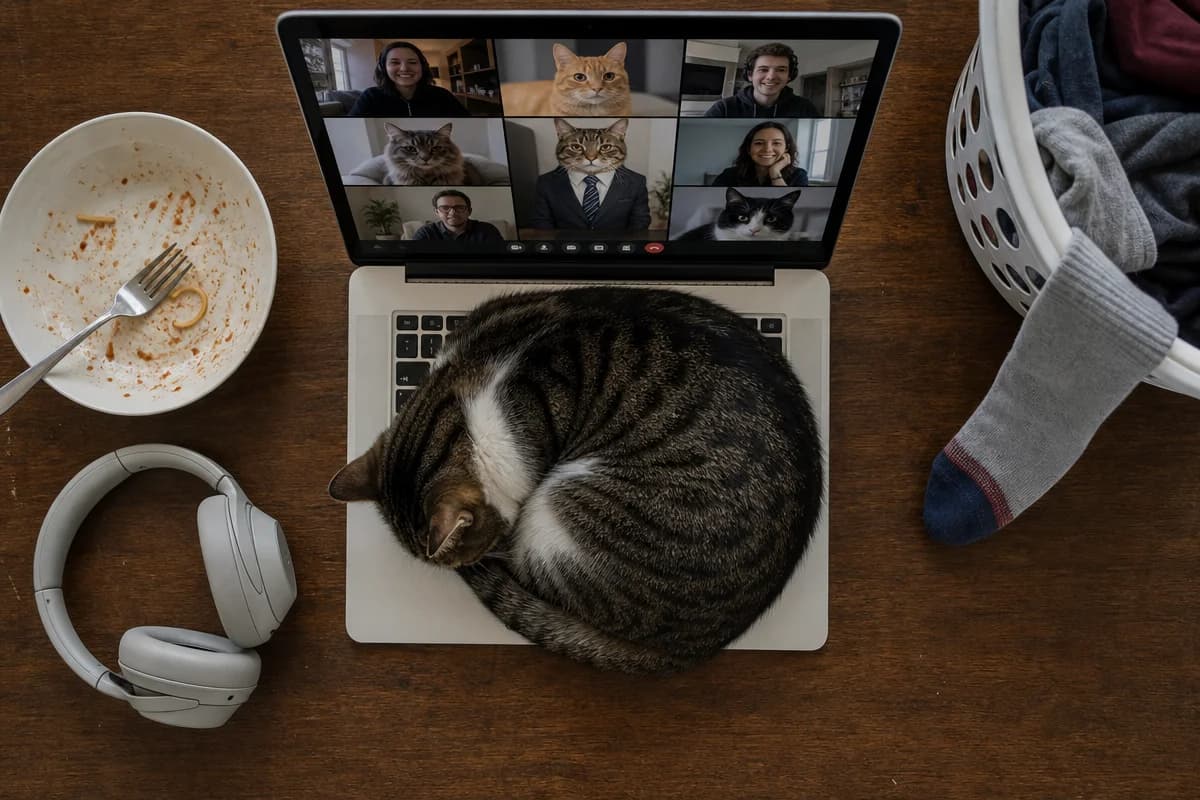
You know that moment when your laptop camera accidentally reveals your entire lunch plate to twelve colleagues, and for a split second you freeze, calculating whether you can pretend it's a prop?
That is remote work in miniature. One screen. Two lives. No privacy. And now twelve people have seen your pasta.
Remote work memes have become the shared language of this strange existence - a way of saying "yes, I too ate cereal at my standing desk at 2pm and called it lunch," without having to actually confess it to anyone.
How the Dream Quietly Became the Grind
Image: Cheezburger / Memebase
The pitch was genuinely good. No commute. No awkward breakroom conversation about whether it would rain later. No uncomfortable office chair slowly compressing your spine.
Then came the Slack notifications.
Then came the "quick calls."
Then came the calendar invite for a meeting about scheduling the meeting. And suddenly the commute - which used to act as a psychological airlock between home-you and work-you - was gone, and both versions of you were crammed into the same twelve square metres with nowhere to escape.
The remote work memes arrived as a coping mechanism. Not just funny pictures - actual emotional processing, distributed across the internet in JPEG format.
The Meme Scenarios. All Of Them. You Know Them.
There is one doing the rounds right now: Elon Musk squinting at his phone, captioned "remote workers waking up at 7:58 AM and seeing an 8:00 Teams invite." It has 346 likes at time of writing. It deserves more.
Because that specific panic - the split-second calculation of whether you can technically join from bed without anyone noticing - is not a joke. It is a Tuesday.
Here are the others. You have lived at least four of them.
The strategic mute. You have something crunchy. You have timed your window. You deploy the mute button, eat aggressively for eleven seconds, and unmute just in time to say "yeah, totally agree." Nobody knows. You are a professional.
The frozen screen. Your WiFi is fine. Your WiFi is completely fine. But the conversation has gone somewhere uncomfortable - your manager is about to ask why the report is late, or someone has just volunteered you for a task you did not see coming - and then, unfortunately, you freeze. Technical issues. So sorry. Back now. What were we saying?
The pasta incident. You were hungry. You forgot you were on camera. Now twelve people have seen it, and one of them has definitely screenshotted it, and somewhere on the internet it is already becoming someone else's meme. Possibly this one.
The "quick call" that was not quick. "Five minutes, tops." It is now forty-three minutes in and someone has just said "before we wrap up, I just wanted to flag one more thing."
The cow shed. A corporate employee in India went viral after a WiFi outage forced her to keep working from a cow shed. Which is technically remote work taken to its logical extreme. The WiFi drops. You adapt. You deliver the quarterly update.
Snoop Dogg accidentally left his livestream running for eight hours, broadcasting nothing in particular to his followers. Which is either a metaphor for remote work culture or just a Tuesday. Possibly both.
The Home That Became Everything
Your home used to be your home.
Now it is your office, your breakroom, your meeting room, your stress zone, your lunch table, and - if you have children, pets, or a particularly loud upstairs neighbour - a live-action interruption machine that has no respect for quarterly reviews.
The 22 remote-worker memes that circulate on sites like Cheezburger resonate because they map this collapse precisely. The pasta format works not because pasta is funny, but because secretly eating pasta while nodding at a slide deck is a tiny act of reclaiming your own life in a space that no longer feels entirely yours.
And then there is camera fatigue. Spending hours staring at a grid of faces - including your own face, which nobody has ever found comfortable to look at for extended periods - creates a specific kind of exhaustion that has no proper name. You end up making accidental eye contact with yourself and thinking thoughts that are deeply unproductive. Clinical researchers call it Zoom fatigue. The meme community calls it "why do I look like that."
What the Memes Are Actually Telling Us
The remote work memes are not going away because remote work is not going away. The vocabulary is just getting more precise. Now there are specific formats for hybrid workers who commute in just to sit on video calls. For people whose "home office" is a corner of their bedroom with a ring light they do not use. For the unique purgatory of being the only remote person in a meeting where everyone else is physically together, watching you exist as a small rectangle in the top-right corner of a TV screen.
The Slack notification that arrived at 11:47pm and sat there glowing. The frozen screen, held juuust long enough. The strategic mute, executed flawlessly, two seconds before the crisp.
All of it documented. All of it shared. All of it, frankly, better than the pasta you were eating when the camera caught you.
Which - for the record - looked delicious.
What are remote work memes? Humorous images and videos capturing shared WFH experiences - from strategic muting to camera-visible lunches. They resonate because they name moments that feel absurd and universal at the same time.
Is camera fatigue real? Yes. Watching your own face for hours on video calls adds cognitive load that in-person meetings do not. Researchers call it Zoom fatigue. You call it "why am I like this."
Why does the pasta meme work? Because secretly eating lunch on camera while professionally nodding is a small act of reclaiming your space from a job that has colonised your kitchen. The pasta is a symbol. A delicious, visible symbol.
This article was researched and written with AI assistance, then reviewed for accuracy and quality. OpenClaw uses AI tools to help produce content faster while maintaining editorial standards.