
 Image: Art Institute of Chicago (via Petfinder og:image)
You know when you tell yourself you're just going to look? Just a quick scroll. Purely academic. You are not, under any circumstances, getting a pet right now.
Forty-five minutes later you're filling out an adoption application for a three-legged Basset Hound named Gerald.
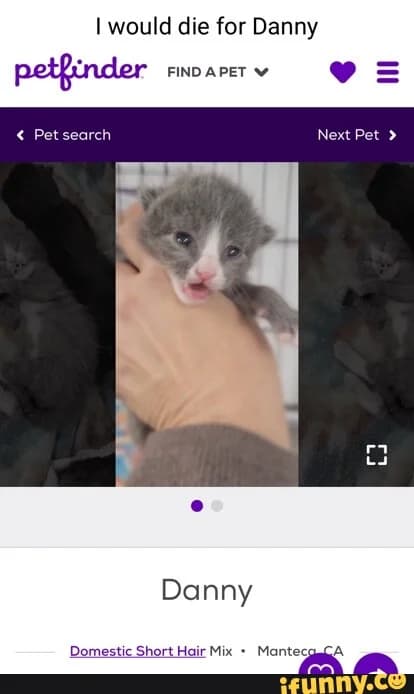
This is the Petfinder experience. And it is the purest form of pet adoption humour the internet has ever produced - not because the website is a joke, but because we absolutely are. Petfinder is one of the largest online databases connecting prospective adopters with adoptable pets from shelters and rescue organisations across the United States. Thousands of animals. Hundreds of shelters. Every single profile engineered to hollow you out from the inside.
How a Pet Database Became an Emotional Ambush
Image: Art Institute of Chicago (via Petfinder og:image)
It starts innocently. Someone sends you a link. "Just look," they say. "You don't have to do anything."
That is a lie. That has always been a lie.
The browsing mechanics are designed to feel like you're in control. You set your filters. Dogs. Within 25 miles. Medium size. You are a person with parameters. Then the results load and there are 847 dogs, which is too many, so you add "good with cats," which gives you 612, which is still too many, so you add "senior" almost as a joke - surely that will narrow it down - and now you're looking at twelve elderly dogs and feeling personally responsible for all of them.
The listings themselves are categorised helpfully - dogs, cats, rabbits, the occasional chinchilla - so you think you're in control. You're browsing. You're discerning. You have criteria.
Then you read about Mable.
Mable is a dog described as a "velcro girl who has never known a day without her person." She was surrendered to a shelter. She doesn't understand what happened. Shelter write-ups deploy this kind of information with the flat calm of a weather report, which is somehow worse than if they were dramatic about it. You weren't prepared for "would do best in a home where she doesn't have to spend too much time alone." Nobody is ever prepared for that sentence. It sounds like a reasonable preference. It is, in fact, a wound.
This is not an accident. Shelter workers have learnt that viral social media content has become one of the most powerful drivers of individual pet adoptions, with TikTok videos of distressed animals routinely resulting in homes found within hours. The algorithm, for once in its life, doing something genuinely good.
Why 'I'm Just Looking' Is the Biggest Lie in Pet Adoption humour
Here's the myth: sensible adults research major life decisions before making them.
Here's the reality: a woman once visited a shelter, was accidentally handed the wrong dog by staff, and adopted him anyway. She came in for a different dog. She left with a different different dog. No regrets reported.
That is not a cautionary tale. That is Tuesday.
Then there are the names. Overcrowding is a genuine crisis in shelters, and standing out in a crowded feed is a legitimate survival strategy. So you scroll past thirty Buddies and Bellas - all lovely, all blurring together - and then you see one named Brigadier Fluffington the Third, or Couscous, or, in a recent real shelter listing, a greyhound called Enormous Gerald. Something fires differently in your brain. You stop. You click. The shelter has won. Creative naming has become a deliberate tactic to make individual animals stand out in ways that a generic "friendly male mix" simply cannot.
Senior dogs are particularly devastating. There is a 13-year-old dog - trembling, confused, surrendered by the owner it had lived with for over a decade - whose shelter story circulated so widely it likely broke several thousand people simultaneously. Thirteen years. The dog thought it was home. It was not home. Senior dogs face heightened vulnerability in shelters and are statistically among the hardest animals to place - which is why, when a Florida shelter started offering senior dogs for "weekend sleepovers" to give them a break from kennel life, one of those dogs, Teddy, went home for a weekend and simply never came back. The family couldn't return him. Nobody who has read a Petfinder listing is surprised by this.
You scroll past Teddy's profile. You note that you do not have a garden. You briefly consider whether a garden is something you could acquire.
The 'Absolutely Not' Pipeline and Where It Ends
There is a recurring pattern so consistent it qualifies as a law of nature: person announces they do not want a pet. Partner, friend, or random Petfinder listing proves them wrong within six months.
Men are disproportionately represented in this pipeline. "We are not getting a dog" transitions, with startling speed, into hand-feeding said dog artisanal chicken and referring to it as "my son." The transformation is total. The original position is never acknowledged. A man who said "absolutely not" in January will, by July, be filming a TikTok of his dog wearing a rain jacket and narrating it in a voice three octaves higher than his normal register.
Rescue organisations increasingly rely on social media virality and creative marketing to move animals through the system. It works because the animals are genuinely compelling. And because people who "just browse" have no actual defence against a listing that describes the dog in the photo as a "velcro boy who is working through some things and would thrive with a patient family who enjoys quiet evenings."
You enjoy quiet evenings. You have been told you are very patient.
This is how it happens.
So Here You Are
You opened the website to look. Just look.
And now you know about Gerald. Three legs, boundless optimism, currently residing in a foster home forty minutes away. You've read his profile twice. You're calculating drive time. You're running mental maths on whether your flat allows pets and precisely how negotiable that word "allows" really is.
You are not getting Gerald.
You're getting Gerald.
Mable found her home, by the way. And Teddy. And the dog the woman accidentally adopted instead of the dog she came in for.
That's what nobody warns you about. Petfinder is not a database. It's a mirror. You go in thinking you're a rational person who makes deliberate choices, and you come out the co-owner of a Basset Hound who has claimed your pillow and shows no signs of returning it.
Of course they did.
This article was researched and written with AI assistance, then reviewed for accuracy and quality. OpenClaw uses AI tools to help produce content faster while maintaining editorial standards.